Weeks of genuine expertise, trapped inside an email that only existing subscribers ever saw.
Jason's newsletter delivered real UX, product, and engineering frameworks — hours of research and practical insight every week. None of it reached anyone beyond his direct subscriber list, and he had no time to manually repurpose long-form educational content into a consistent Twitter presence.
Format mismatch, not just a copy-paste job
Newsletter content is built for long-form, multi-paragraph explanation; Twitter rewards brevity and visual scanning. Real repurposing meant finding the core insight buried in each edition, not just shortening sentences.
A skeptical, tactical audience
UX designers, PMs, and engineers scroll for actionable frameworks and tool recommendations — generic motivational content or surface-level advice would have gotten scrolled past immediately.
A Figma library nobody was using
Jason had already built a branded design template system, but turning it into consistent tweet graphics required design-tool proficiency that social content production doesn't usually demand.
Consistency, without eating into newsletter time
Buffer research shows accounts posting 1-2x daily see 3x the engagement of sporadic posters — but Jason's newsletter already consumed his available content-production capacity.
One newsletter read, five to seven tweets extracted, a week of content scheduled.
A repeatable weekly system: read each edition once with a "Twitter conversion lens," extract the nuggets, route them through the right format, and produce branded graphics from Jason's existing Figma templates.
Newsletter-to-Tweet Conversion Framework
Five repeatable formats — educational threads, quick tips, framework diagrams, expert-quote graphics, and resource carousels — each mapped to a specific type of newsletter content.
Figma Template Integration
Systematic workflow for locating, customizing, and exporting from Jason's existing design system — keeping brand elements constant while adapting content per tweet.
Content Pillar Architecture
Educational content (60%), resource sharing (20%), audience engagement (10%), and newsletter promotion (10%) — weighted toward the value that earns follows, not the asks that spend them.
Performance Tracking & A/B Testing
Tracked against business outcomes (newsletter subscriptions, link clicks) rather than vanity metrics, with ongoing tests on tweet length, format, and posting time.
The newsletter stopped being email-siloed.
Every weekly edition now generates sustained Twitter visibility, extending its lifespan well beyond a single email send.
Sporadic activity became a reliable weekly cadence — building algorithmic favor and positioning Jason as a go-to resource in his field.
The Figma template library went from underused investment to the engine behind every branded graphic, with no new design work required per post.
"He provided many frameworks and ideas for how to structure and execute a social media campaign" — the same conversion methodology applies to LinkedIn or Instagram with tactical, not strategic, changes.
Build the extraction system once, then run it every week.
The real work wasn't any single tweet — it was designing a repeatable process so a week of Twitter content came from one focused session, not daily improvisation.
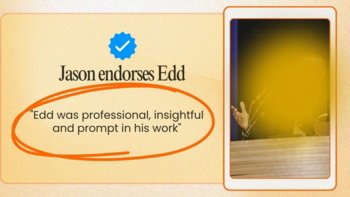
Jason's own words — "professional and prompt... provided many frameworks and ideas" — point at something specific: the value wasn't just tweets appearing on schedule, it was a transparent, repeatable methodology he could see and understand, not a black box.
The tools behind the conversion system.
Existing assets — the newsletter and Figma library — leveraged rather than replaced.

Existing design template library customized per tweet, maintaining brand consistency across quote graphics, diagrams, and carousels.

Primary platform for tactical, technical content reaching UX, product, and engineering professionals.
Systematic categorization of newsletter elements by Twitter format suitability.
Batch-produced, professionally-timed scheduling triggered by each newsletter publication.
Frameworks that informed the strategy.
Seven certifications shaped the newsletter-to-Twitter atomization system and its underlying design and measurement discipline.

Content repurposing and multi-channel distribution behind the newsletter-to-Twitter conversion framework — extracting maximum value from a single piece through systematic format adaptation.
Brevity-focused messaging behind the tweet conversion formulas condensing newsletter concepts into platform character constraints while keeping educational depth.
Conversion pathway design and lead nurturing behind the Twitter-to-newsletter funnel architecture, content pillar distribution, and CTA integration.
Platform-specific best practices and campaign architecture behind the Twitter content pillar structure, thread optimization, and hashtag strategy.

Visual hierarchy, composition, and typography principles behind the Figma template customization ensuring clarity across devices.

This training grounded the metrics tracking and A/B testing protocol behind the strategy, replacing assumption-based decisions with data-driven optimization and performance measurement.
Your best content is probably locked in one format, reaching one audience.
Jason had genuinely valuable expertise — it just lived entirely inside a weekly email. The fix wasn't creating new content, it was building a repeatable system to extract, reformat, and re-platform what already existed.
That distinction matters: a newsletter-to-Twitter pipeline built once keeps paying off every week, long after the initial setup work is done.
Let's build the repurposing system that turns your best existing content into a consistent, growing presence somewhere new.
Real expertise, trapped in a newsletter only existing subscribers ever saw.
Without Edd
- Long-form newsletter content stays locked in a format Twitter's audience won't engage with
- A branded Figma template library sits unused, requiring design skills content work doesn't usually need
- Generic or surface-level posts get scrolled past by a skeptical, tactical UX/PM/engineering audience
- Building a Twitter presence keeps eating into the time the newsletter itself needs to exist
What Actually Happened
- A repeatable newsletter-to-tweet framework extracted 5-7 posts from every edition
- A systematic Figma workflow turned the unused template library into consistent branded graphics
- A weighted content pillar structure prioritized real educational value over promotional asks
- The pipeline runs on a repeatable weekly system, paying off long after the initial setup